

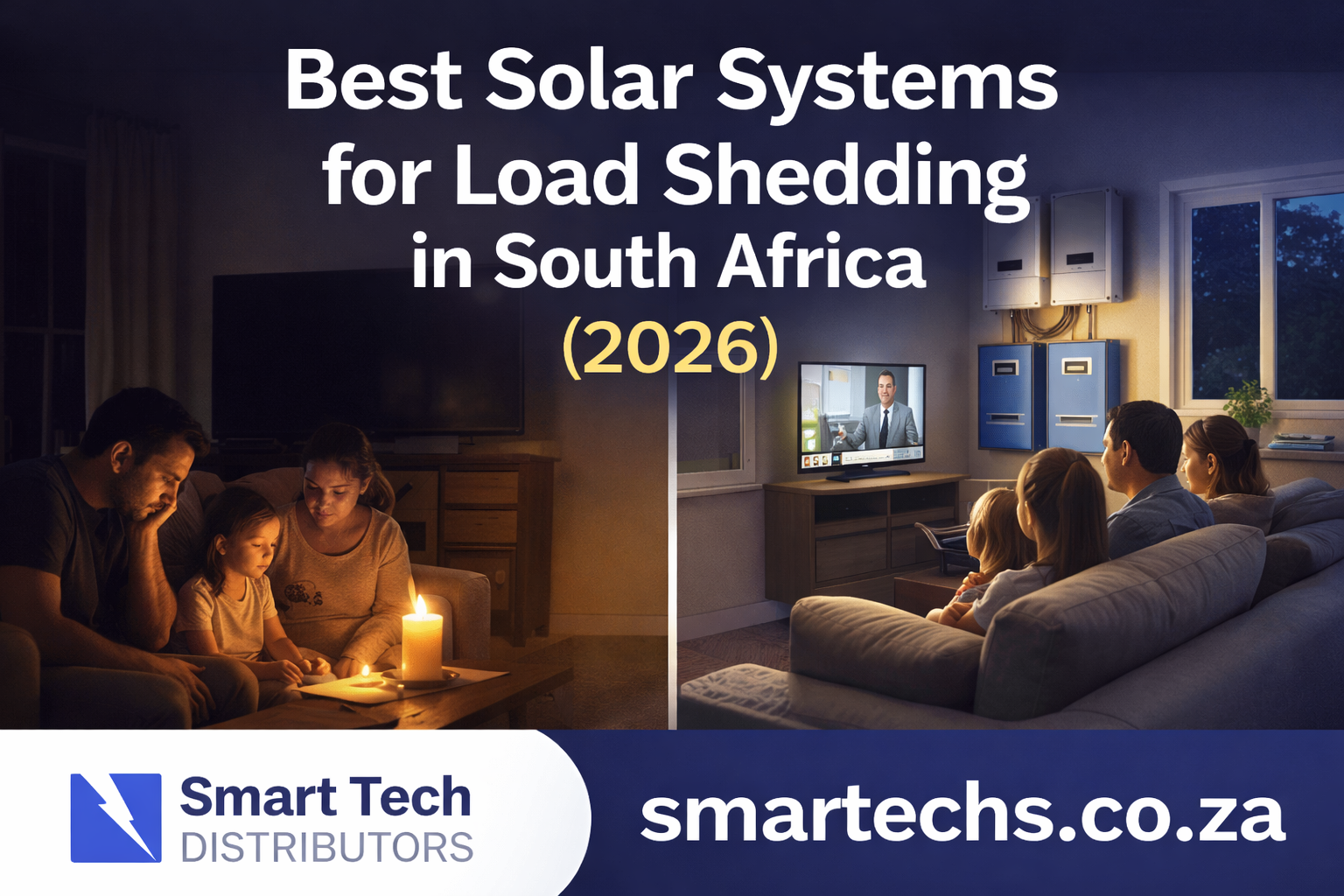
Load shedding continues to impact homes and businesses across South Africa. If you’re tired of sitting in the dark, you’re probably asking:
👉 “What is the best solar system for load shedding?”
In this guide, we break down:
- The best systems for different budgets
- What size inverter and battery you need
- Costs and setup options
- What actually works (and what doesn’t)
🔋 What You REALLY Need for Load Shedding
To survive load shedding, you don’t always need a full solar system.
👉 The core components are:
- Inverter
- Battery
- (Optional) Solar panels
⚡ Minimum Backup System (Essentials Only)
🔹 What it powers:
- Lights
- TV
- WiFi
- Laptop charging
🔹 Recommended setup:
- Inverter: 3kW – 5kW
- Battery: 5kWh
💰 Cost:
- R40,000 – R80,000
👉 Ideal for:
- Apartments
- Small homes
- Budget-conscious users
🏡 Mid-Range System (Most Popular)
🔹 What it powers:
- Lights
- TV
- Fridge
- WiFi
- Some plugs
🔹 Recommended setup:
- Inverter: 5kW – 8kW
- Battery: 5kWh – 10kWh
- Optional solar panels
💰 Cost:
- R80,000 – R160,000
👉 Ideal for:
- Average households
Popular Systems in South Africa (2026)
Full 5kw DEYE Residential System
Full 8kw Sunsynk Residential System
🔥 Full Backup Solar System (No Load Shedding Impact)
🔹 What it powers:
- Entire home
- Appliances (fridge, washing machine, etc.)
🔹 Recommended setup:
- Inverter: 8kW – 12kW
- Battery: 10kWh – 20kWh
- Solar panels included
💰 Cost:
- R160,000 – R350,000+
👉 Ideal for:
- Large homes
- Businesses
- Schools
🔋 Battery Size Guide (VERY IMPORTANT)
👉 Your battery determines how long you survive load shedding
| Battery Size | Backup Time |
|---|---|
| 5kWh | 2 – 4 hours |
| 10kWh | 4 – 8 hours |
| 20kWh | 8 – 16 hours |
💡 Tip:
If you experience Stage 4–6 load shedding, go for 10kWh+
☀️ Do You Need Solar Panels?
❌ Not always required
You can start with:
- Inverter + battery only
✅ But solar panels give you:
- Free daytime electricity
- Battery recharging
- Lower Eskom bills
👉 Best strategy:
Start with backup → add solar later
⚠️ What DOESN’T Work (Avoid This)
🚫 Small cheap inverters (won’t handle load)
🚫 Lead-acid batteries (short lifespan)
🚫 Undersized batteries
🚫 No installation planning
👉 These lead to:
- System failure
- Frustration during outages
📊 Real Example (School System Insight)
A recent system we analysed:
- 70% powered by solar
- 30% from Eskom
- Main issue: battery too small
👉 Lesson:
- Battery sizing is critical, not just panels
💰 Cost vs Value


7
Without solar:
- Ongoing Eskom increases
- No power during outages
With solar:
- Reliable electricity
- Lower bills
- Long-term savings
📍 Why Choose Smart Tech Distributors?
At Smart Tech Distributors (smartechs.co.za), we provide:
✅ Sunsynk & Deye inverters
✅ Lithium battery solutions
✅ Expert system sizing
✅ Competitive pricing
✅ Nationwide delivery
📞 Get a Load Shedding Solution Today
Stop worrying about power cuts.
👉 Contact us for a custom solar + backup solution:
- 🌐 www.smartechs.co.za
- 📍 Johannesburg, Gauteng (Nationwide delivery)
🧠 Final Thoughts
Load shedding isn’t going away anytime soon.
👉 The right solar system gives you:
- Power security
- Peace of mind
- Financial savings
FAQ Section
For basic load shedding backup, a 3kW to 5kW inverter with a 5kWh battery is sufficient. For a full home solution, most households require a 5kW to 8kW inverter with a 10kWh battery or more.
A 5kWh battery typically lasts 2 to 4 hours, while a 10kWh battery can last between 4 to 8 hours depending on usage. Larger systems can provide power for extended outages.
Yes, you can install an inverter and battery system without solar panels. This will provide backup power during load shedding, but adding solar panels later helps reduce electricity costs and recharge batteries.
Costs vary depending on system size. Basic backup systems start from around R40,000, mid-range systems cost between R80,000 and R160,000, and full solar solutions can exceed R200,000.
Lithium-ion batteries are the best choice for load shedding due to their longer lifespan, higher efficiency, and faster charging compared to lead-acid batteries.
A properly sized solar system with sufficient battery storage can eliminate the impact of load shedding, allowing your home to operate normally during outages.
The inverter size depends on the total load you want to power. A 5kW inverter suits most homes, while larger homes or businesses may require 8kW to 12kW systems.
Yes, solar remains a strong investment due to rising electricity prices, frequent load shedding, and long-term savings on energy costs.
